Thursday, September 29, 2011

Wind Farm Imposed on Howdenshire Village of Spaldington by Government Planning Inspector (but it could have been worse)

The Government’s Planning Inspector has published his decision on the appeals for the two wind farm proposals, one at each side of the small village of Spaldington. His decision is to allow the 5 turbine Spaldington Airfield application to the west of the village but to throw out the 7 turbine Spaldington Common application to the east.

I have worked very closely with the Spaldington residents and the STOP team since the ERYC Planning Committee’s decision to refuse these applications, knowing that the developers would certainly appeal the decisions. I know the residents team well, and having spoken to some of them today I realise just how deflated and devastated they feel, but this is tempered by winning one of them.

It is common for a community to stand up to fight the imposition of one large wind farm next to their village, but very unusual for them to have to fight two at the same time. In many ways this is a hollow victory and many Spaldington residents will be fearful of the future as their properties are overshadowed by some of the highest onshore wind turbines in the country within 750m. Much, much closer than we see at the only constructed similar size wind farm at Lisset.

It is ironic that within a handful of miles of Spaldington, turbines could be constructed far enough away from properties so as not to have a negative impact on them. This is mainly a result of those land owners not being willing to sell to the wind farm companies. What is perfectly clear is that more effort has to be made by developers and particularly the East Riding of Yorkshire Council to make sure appropriate sites are selected and not on the basis that a landowner is willing.

The Council’s Planning Committee come out of this very well in the way they made their decisions to refuse both applications, unfortunately the same cannot be said of the Council’s Planning Department, who had recommended approval on both applications and the flawed evidence put forward by the Council’s team as detailed in the inspectors findings. I really hope the Council’s Planning Department Officers now take a very close look at the inspector’s decision, particularly regarding proximity and specifically when he says, “In relation to the Common scheme, I have found that the proposal would result in unacceptable harm to the living conditions of nearby residents through being dominant and overbearing and noise disturbance”. For far too long I have been saying that a line has to be drawn in the sand when it comes to the proximity of large wind turbines to houses, and to read a Planning Inspector agree in many ways vindicates my position.

The Inspector also makes reference to the Council’s Interim Planning Document (IPD) on Renewable Energy when he says, “Although the IPD has been the subject of public consultation, given the absence of an adopted Development Plan Document and the apparent conflict with national guidance, I attach limited weight to the IPD”. Again this was something I raised in my motion to the ERYC Full Council on 13th October 2010 - but very little has subsequently been done, again I feel somewhat vindicated by the Planning Inspector’s comments.

In addition the Planning Inspector rightly criticises the key photographic evidence, drawings and measurements provided as evidence by the Council when he says “Whilst not all of the criticisms made by the appellants were accepted the Local Planning Authority (the Council) did acknowledge that, as submitted, all of the viewing distances and angles of view quoted were incorrect”. This is something that really should not happen.

On a positive note, we now have the line drawn in the sand regarding proximity distances from residences; we now know what is acceptable and what is not. It is important that this is built into a revised policy on renewable energy which I called for last year and is now needed following the Inspectors remarks.

This may be too late for some villages in the East Riding of Yorkshire, but will no doubt benefit many in the future, and developers will now have to consider this when submitting wind farm applications. I would like to recognise the STOP team of residents, expert witnesses and their Barrister – without which I am absolutely convinced the Spaldington Common wind farm would not have been thrown out. The work they have done will benefit the wider East Riding, and for that I am very proud.

The inspector’s conclusions are as follows:

In relation to the Airfield scheme, I have concluded that the proposal would not have an unacceptable impact on living conditions, landscape character, public visual amenity, ecology and the operation of Breighton Aerodrome. Whilst there would be some harm to the setting of Howden Minster, I consider that harm is outweighed by the significant weight to be attached to the need for renewable energy and benefits of the scheme. Accordingly, I conclude that, subject to the imposition of appropriate planning conditions and the relevant provisions of the S106 UU, this proposal would not conflict with the objectives of development plan and national policy. Accordingly, I allow the appeal.

In relation to the Common scheme, I have found that the proposal would result in unacceptable harm to the living conditions of nearby residents through being dominant and overbearing and noise disturbance and some harm to the setting of Howden Minster. Notwithstanding my positive conclusions in relation to landscape character, public visual amenity, ecology and aviation matters, I consider the harm is not outweighed by the benefits of the scheme or the need to meet regional targets for the provision of renewable energy. Moreover, this harm would not be acceptably mitigated by imposing planning conditions. Accordingly, I conclude that this proposal would conflict with the objectives of development plan and national policy. Accordingly, I dismiss the appeal.

Monday, September 26, 2011

Road Grates Replaced on Gilberdyke to Howden Road

Sometimes there is a perception that the East Riding of Yorkshire Council’s highway maintenance is not as responsive as it might be, mainly because of a history of reduced government funding. But a good example of how the highways maintenance team works really well is highlighted in the work replacing some 40 gully tops/grates on the B1230 at each side of Balkholme flyover between Gilberdyke and Howden.

Many would have seen the numerous times one or more of the grates were laid on the tarmac or wedged in the frame at an odd angle after being ‘bounced out’ of the frames by the action of being run over by a vehicle.


I had received a number of calls and messages from residents and road users regarding this, and actually found myself stopping on numerous occasions to put the grates back into their frames, and on mentioning this was surprised to find that Anna Longthorp owner of local business ‘Anna’s Happy Trotters’ had also been stopping to replace grates in their frames. It got to the stage where Anna would send me a facebook message telling me that she had ‘replaced another one’…. (pictured with Anna Longthorp)

The Council acted very quickly when I raised this as a safety concern, they inspected the gully grates, and ordered in the new iron tops and frames when the originals were found to be badly corroded around the hinges and unsafe.

The most pleasing aspect of this work carried out by the Council’s own team, was not just the quality and speed of which it was accomplished, but with the minimum disruption to road users. A good example of a job well done before anyone was seriously hurt.

Thursday, September 22, 2011

Howden School and Technology College out of Special Measures


I thought the highlights of a school Governor was being the Chair of the Governing body at Gilberdyke Primary School when we achieved the status of an ‘Outstanding School’, it was something we had built up to year on year, the management of the school and the systems were excellent, the kids were well behaved, and the parents, teachers and staff were very proud of ‘their’ school. It was great to appear alongside long-standing Head Martin Alger before the Council's Children and Young People Overview and Scrutiny Committee and answer the question posed by the Chair on the day, “Now Cllr Robinson will tell us how to achieve an outstanding report from OFSTED”.

I still remain a member of the Governing Body at Gilberdyke, but in addition was asked to become a Local Authority appointed Governor at Howden School and Technology College (my old school) when it was plunged into special measures last year. This was certainly going to be a challenge.

Recently the school achieved its best GSCE results its history with 55% achieving grades A* – C in five subjects including maths and English, and acknowledged as being the most improved School in the East Riding of Yorkshire, so we knew we were on the right track.

I must say that previous highlight has most certainly been matched this week, as on Tuesday and Wednesday, 20th and 21st September, Mr Bernard Campbell HMI and his team came to Howden School to carry out their third monitoring visit. They were so pleased with what they saw they decided on Tuesday night to turn the monitoring visit into a full Section 5 Inspection (The basic Ofsted inspection that all schools get).

The outcome of the Section 5 Inspection was that the school is now a ‘satisfactory’, school and therefore does not require ‘special measures’. This means that from today (Thursday) officially the School is out of special measures.

I know just how much work has gone into picking up the pieces and rebuilding the school, and I’m immensely proud of my fellow Governors, the Executive Head Dave McCreedy, and Acting Head Gary Garghan (both ‘loaned’ to us by Wolfreton School), the teachers and staff, parents and carers, and the officers of the Local Authority – but most of all the students who have worked so hard to get the label of ‘special measures lifted.

I understand it is almost unprecedented for a school to rid themselves of the ‘special measures’ tag after just 3 monitoring visits, so this is an amazing outcome. This is truly the result of what can happen when all stakeholders: students, parents / carers, staff, governors, community partners come together in a common cause – this is has become known as ‘Team Howden’ and I’m proud to have been part of that team.

Acting Head Gary Garghan best summed it up when he said, “So we have now exchanged the miserable category ‘special measures’ for one that says we are ‘ok’. Not good enough for ‘Team Howden!’ The mission to move towards being an outstanding school starts today!!!!!!” – I could not agree more.....

Wednesday, September 14, 2011

Walking With Elvis for Marie Curie Cancer Care

Many will remember that last year I took part in the ‘Humber Bridge Midnight Walk’ in aid of Marie Curie Cancer Care. This past weekend my daughter Katy and I again took part in this year’s event, but this time I was persuaded by the organisers (who knew I possess the requisite attire) to appear and walk as Elvis. In the absence of the Lord Mayor of Hull (who let the organisers down) I was asked to step in as the walk starter and gave the following in my very best Elvis accent:

“IT’S MIDNIGHT” and can I just say “HOW GREAT THOU ART”, for joining me, a hunk of “BURNING LOVE”, and my “GOOD LUCK CHARM”, my “LITTLE DARLIN”, my daughter Katy…, but most importantly it’s the “WONDER OF YOU” for being here for just “ONE NIGHT” to stride out with “A FOOL SUCH AS I” in “MY BLUE SUEDE SHOES”, to walk “DOWN BY THE RIVERSIDE”, raising money for that “HARD HEADED WOMAN” ….. MARIE CURIE.

Well I’m “ALL SHOOK UP” seeing you all here tonight and “I JUST CAN’T HELP BELIEVING” that we will all enjoy the walk over this “BRIDGE OVER TROUBLED WATER”.

I know that I’m “ITCHING LIKE A MAN ON A FUZZY TREE” to get started, and there’s going to be a “WHOLE LOT OF SHAKIN GOIN ON”, I’m sure y’all “HELP ME MAKE IT THROUGH THE NIGHT” on this “LONG LONELY HIGHWAY”, although as we finish the walk I may “NEED SOMEBODY TO LEAN ON”

So, with a “LITTLE LESS CONVERSATION AND A LITTLE MORE ACTION” ladies and gentlemen “IT’S NOW OR NEVER”….

SO…. It’s one for the money, two for the show, three to get ready now go cats, go!!!

... and on the stroke of midnight on a very cold night about a hundred of us set off over the bridge.

About half way across, in the teeth of an appalling headwind, a rather nice lady of a certain age that I was alongside, dressed in green surgical robes, mask and hairnet answered her mobile phone and said, “You’ll never believe this but I’m walking across the Humber Bridge with Elvis Presley" and asked me to speak to her caller – I don’t think the person on the other end believed us for some reason!

Anyway it was nice to walk to Lincolnshire, but even better to walk back to Yorkshire!

Katy and I have so far managed to raise well over £200 for this very worthwhile cause – if anyone would like to donate or sponsor us please let me know!

Thursday, August 25, 2011

Best ever GCSE results for Howden School and Technology College

‘TEAM HOWDEN’ MOVES FORWARD!!

Students at Howden School and Technology College achieved the schools best ever GCSE exam results today.

55% of students gained the prestigious ‘gold standard’ benchmark of 5 A* - C GCSE’s (Including English and Mathematics) whilst 70% achieved 5 A* - C GCSE grades and 97% got 5 A* - G grades.

Garry Garghan, Acting Headteacher, commented:

‘We are thrilled with these results – a 10% improvement on the gold standard results this time last year.

These results are a testament to all of the hard work put in by everyone connected with ‘Team Howden’ as we regard ourselves. Students, staff, parents / carers, governors, community partners and the LA have all worked together to move the school forward.

These results, the best in the history of the school demonstrate that we are well on course to cast off the ‘special measures’ label during this coming academic year.’

Thursday, August 04, 2011

Gilberdyke's Community Funded Drainage Culvert Worked During Heavy Rainfall

Although Gilberdyke didn’t get anywhere near as much rainfall as Goole yesterday it was great to see the new community funded culvert taking all the water. I’m reliably informed that some 25mm of rain fell in the village and although some water levels did rise on some of the roads and at least one garden saw some localised flooding, I’m not aware of any flooding in people’s houses.

The water entered the culvert at the western end without obstruction and flowed out into the large dyke known as Far Drain at the eastern end. The head of the water forced its way out of the culvert and into the dyke even though the level in Far Drain was above the level of the culvert during the peak flow.

Needless to say the culvert did exactly what it was supposed to do, we would not have seen the water move so quickly through this section prior to the work taking place, as the narrowness of the former dyke and capacity of the previously potted sections with their ‘protective grills’ would have created the pinch points and impeded the flow, as highlighted in the survey conducted by Mason Clark after the 2007 floods. The report from this survey subsequently led to the culvert being installed.

All in all it was rewarding to see the system work, and I look forward to the remainder of the work being completed in the near future enabling the culvert to be extended to drain surface water from those at risk properties in Westbrook Road. This of course puts less pressure on the existing surface water and foul water systems in the village meaning that the flood risk to the whole village is reduced.

Many thanks to Gilberdyke Parish Council and the Flood Action Group, the Lower Ouse Internal Drainage Board, the East Riding of Yorkshire Council Drainage Engineers, and the community for their support, a great result of what can be achieved by working together.

Wednesday, August 03, 2011

Gilberdyke's Leatherdog Lane Tip Liaison Group Established


As part of the planning consent to increase the life by one year of the Leatherdog Lane Tip located between Gilberdyke and Newport, there was a requirement by the tip owner to establish a Liaison Group consisting of community representatives, and also those from the East Riding of Yorkshire Council (ERYC) and the Environment Agency, as well as the tip operators.

A meeting to set up this Liaison Group was held last Thursday 28th July 2011 in Newport. Both Gilberdyke and Newport Parish Councils had put forward their two respective Chairmen, Nick Norris and Roy Hunt to sit on the group, as well as myself as the ERYC Howdenshire Ward Councillor.

It was suggested and agreed that I chair the Liaison Group which is envisaged to meet every six weeks.

It was established that the best way for the community to be represented on the group was through the Parish Councils, and the respective chairmen would give updates and take questions and ideas from residents at open forums as part of the regular Parish Council meetings, they could then take these to the Liaison Group.

It was felt essential that the two main regulatory agencies, namely the ERYC and the Environment Agency be represented and the liaison group would be a forum for both to sit around the same table, to hear first-hand the communities concerns and for joint action to be taken if deemed necessary.

It was agreed by the operator that the tip would be filled within the recently granted year’s extension period, and that no further extension to the life of the tip would be required.

“It is about how the Liaison Group can work with the operator to ensure that the tip is filled and capped off within the timeframe agreed as part of the planning application, and within the regulations and conditions imposed, not only by the planning consent - but also the licence given by the Environment Agency. I personally feel the operator has to tell us how many HGV movements are required to complete the tip, and how these movements can be managed to minimise the negative impacts on residents – particularly those living down Newport’s Thimblehall Lane. There are also on-going issues around smell and the tip height that must be addressed”.

Sunday, July 31, 2011

Long awaited roadworks between Wressle and Breighton

Roadworks on the road between the Howdenshire villages of Wressle and Breighton are due to shortly commence on Monday 22nd August and are expected to last two weeks (Weather permitting).

(Pictured with my fellow Howdenshire ERYC Councillor Nick Evans)

This is something that I have been pushing for since before the Bubwith bridge closure, and certainly afterwards as the road became damaged with the diverted vehicles using the road as a detour.

The carriageway between Breighton Road & Lund Lane is due to be resurfaced as part of the Council’s road improvement programme 2011 - 2012. The work will consist of recycling the existing carriageway to a depth of 220mm, further strengthening of carriageway approaching ‘Wressle Clough', and a new macadam road surface course.

To undertake the work safely it will be necessary to close Breighton Road & Lund Lane at the junction with Main Street in Wressle and at the junction with Ferry Lane in Breighton for the duration of the works. Although access will be maintained for residents, refuse collections, postal services and emergency services.

Traffic will be diverted during the works and letter is to be delivered to resident/farms disrupted by the work (along with surrounding areas) in due course.

The work will be carried out by Wright Civil Engineering Ltd on the behalf of the East Riding of Yorkshire Council.

Thursday, July 21, 2011

Great news for Bubwith, HOSM and Foggathorpe as numbers of HGVs through the villages is to be reduced

The 7.5 tonne weight limit through Sutton on Derwent and Elvington is to be removed which will reduce the amount of HGVs coming through HOSM, Bubwith and Foggathorpe. Today the East Riding of Yorkshire Council’s Environment and Regeneration Overview and Scrutiny Committee voted to lift the weight limit as was recommended by the ERYC officers in their report to the Committee.

Prior to the weight limit being imposed the HGV movements from Breighton Airfield Industrial Estate went either north through Sutton on Derwent, or either east through Holme on Spalding Moor or west through Bubwith. This had meant that the HGV movements were somewhat shared between all the communities - alas since the weight limit the villages of HOSM, Foggathorpe and Bubwith particularly, had borne the brunt of these lorry movements, so now the burden of HGV movements is once again to be shared by all communities rather than just a small number.

I would like to pay tribute to HOSM, Bubwith and Foggathorpe Parish Councils and residents who had been very proactive in pushing the case forward. Bubwith being insistent that the ERYC assessed both the bridge on the A163 and the Sutton Bridge, as both bridges are about the same age and both awkward to cross, and subject to traffic light controls to ensure single file traffic. The result was that both bridges were deemed capable of taking 44 tonne HGVs, the signs indicating a weak bridge had been removed from the Highfields crossroads in Bubwith, but the bridge still had a 7.5 tonne environment weight limit signed upon it.

I had spoken at length to the Council’s Director of Service; he confirmed that there had been a large number of responses from the public, both in favour of keeping the weight limit and also asking for its removal. The views of the parish councils and residents were taken into consideration and were be included within the report to the Committee, which contained the recommendation for the weight limit to be lifted.

The re-routing of HGVs through rural villages such as Bubwith, Holme on Spalding Moor, Foggathorpe and Harlthorpe had not only passed the problem from one community onto others, but also has a detrimental effect on both the businesses that had to foot the extra fuel costs and increased travelling times, and the wider community with the increased emissions associated with lorries travelling the extra distances. I did not think this fitted with the ERYC policy of reducing emissions through reduced journeys.

Once again many thanks to all those who worked hard to get this weight limit lifted

Wednesday, July 20, 2011

Phase 1 of Gilberdyke Flood Relief Scheme Approaches Completion

Gilberdyke Parish Council is pleased to confirm that the much anticipated phase 1 redevelopment of the critical drainage system in the village will soon be completed, and work will then continue onto phases 2 and 3 on Station Road, Westbrook Road and Bellasize Park.

During the public session of the recent Parish Council meeting held on Tuesday 12th July 2011, the individual who has fought the Parish Council ‘tooth and nail’ for month after month delivered what is hoped was his final inaccurate salvo, when he stated that in his opinion the new system will not work. It was pointed out that the system had been designed by Mason Clark Associates in conjunction with the East Riding of Yorkshire Council’s drainage engineers and the Lower Ouse Internal Drainage Board, and the likelihood of all the professional people involved in designing and putting the project together, and the contractors, all getting it wrong was slim. It was also pointed out that all his concerns had been previously addressed by Eddy Allen, the Clerk to the Drainage Board.

It was further explained in considerable detail how the system within the village dovetails with further works planned to lower and widen the dykes down to the river at Blacktoft, where a new large pumping station is to be installed. This larger project will benefit the much wider area than just Gilberdyke, and will also prevent the tidal effects we see in Far Drain as the water rises and falls at the outlet to Phase 1.

As the work on phase 1 reaches its conclusion the Parish Council has to consider the future of this important section of the redeveloped drainage system. It has been established that the strip of land above the run of the new culvert (that was the original dyke) is still in the ownership of the developer.

The Parish Council is very concerned and disappointed to learn that even before the first phase is completed some residents of Scalby Lane and Chestnut Drive properties are attempting to ‘land grab’ sections of this strip of land as theirs - even though it is owned by another party. This ‘land grabbing’ has to cease and it has to be realised that such actions compromise the future maintenance of this critical drainage system for the whole of the village and surrounding area.

It was agreed by the Parish Council that the next important step was to ensure the future safety and secure maintenance of the new system, and would approach the actual owner of the strip of land above the run of the drain, with a view to the Council taking on the responsibility for and to ensure control of this section. A meeting has been arranged for early August.

“I was disappointed that even after the work has been almost completed the Parish Council is still subject to accusations from the same individual, who has been lightening quick in attempting to claim part of the land above the run of the new culvert for himself. I have visited a number of the properties affected by the work and spoken to many residents, most of which seem very impressed by the standard of work and the way the site has been left, as with projects of this size there are always some very minor issues around replanting of shrubs and landscaping that require addressing – but which I’m confident will be cleared up as soon as possible. More importantly the affected residents I have spoken to are very happy with how their gardens have been left, and I hope this serves as a reassurance to those residents who will be affected by the further two phases which are to be carried out shortly”.

Friday, July 08, 2011

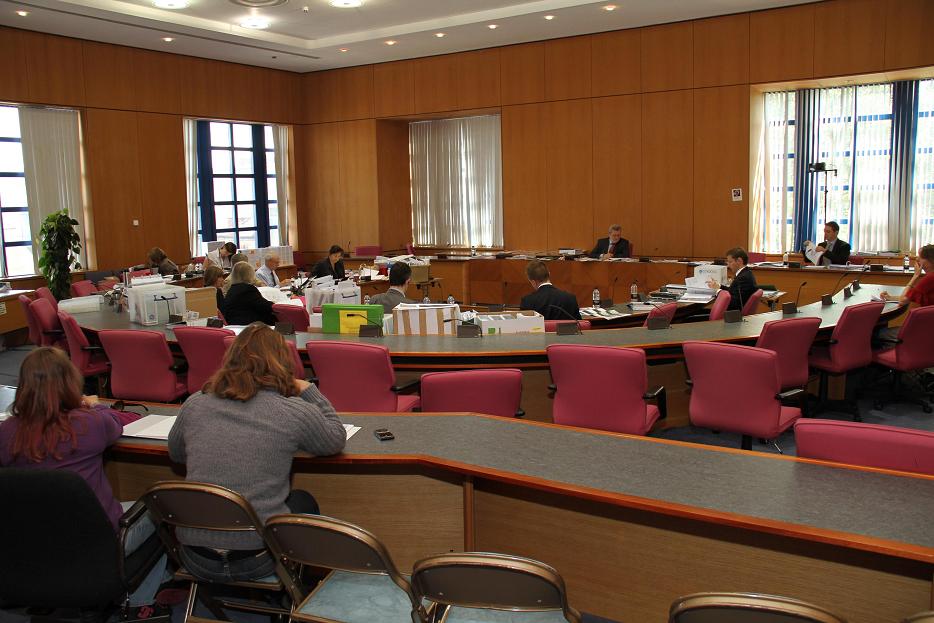
Spaldington Wind Farms Appeal Public Inquiry Presentation

The following is the presentation I gave to Spaldington Wind Farm Appeal Public Inquiry today. I'm not sure how it played with the inspector - but I think it totally wrong-footed the two barristers acting for the two windfarm companies. - in so much has they couldn't find it in themselves to ask me a single question at the end.


1. Introduction

If one was to ask, “How do I get to Spaldington?” Imagine if one or both of these wind farms were approved the answer would be “follow the road to the wind turbines - that’s Spaldington”.

This is not about the proximity of a wind farms to a village - it is simply about Spaldington being at the centre of a wind farm, with residents living between the turbines. It’s akin to separating the Lissett wind farm and dropping Spaldington right in the middle. If the applications are considered separately then either one is far too close to properties, we have not seen anything like the numbers of residences being so close to these large generation turbines anywhere else in the East Riding.

Visualising cumulative impact is very difficult when the number of wind farms that have been consented have yet to be built. This is why it is important to consider not only the 14 wind turbines already built within 20km of Spaldington but also the 78 consented, giving a total of 92 within 20km.

2. Howdenshire

When entering the East Riding of Yorkshire from the west one sees Drax Power Station, followed by the Rusholme Windfarm on the left, on the right you see Goole’s Capital Park with its massive buildings including the glassworks, pelleting factory, and large distribution centre. In the background we see the iconic salt and pepper pot towers, the church spire and the cranes on the Goole docks.

Continuing over the Ouse Bridge into Howdenshire we see the port of Howdendyke and the two large distribution centres on the right, and when one looks to the left a large expanse of rurality then opens up before you – in the foreground we see trees, woods and hedges planted by farmers who over the generations have invested to shape the area.

Howdenshire then stretches almost uninterrupted to the Vale of York to the north, the foothills of the Wolds to the northeast and towards the distant views of the Humber Bridge and City of Hull to the east. It is this tranquil, intimate, rurality dominated only by the tower and green roof of the historic Howden Minster that makes Howdenshire special.

Here I would take the advocate for the Common wind farm back to early in the inquiry when he mentioned the view in some way could be impeded by the crash barrier at the nearside of the M62. I hope since making that statement he has taken the time to join the 18,000 vehicles crossing over the Ouse Bridge daily from the west, and has driven in each of the three lanes of the motorway and seen for himself the unimpeded view of the Minster, and witnessed the potential impact that 12 moving 126m high turbines will have behind and above the roof and tower.

3. The East Riding of Yorkshire Council (ERYC) Planning Committee

It is important to state that during the period from May 2007 to May 2011 I was a member of the East Riding of Yorkshire Council Planning Committee, although I am not representing the committee, these are my views. I have been involved in the decision making process regarding all the renewable energy applications brought before the committee during this period, including both Spaldington applications. I am not a policy maker nor qualified to defend any of the Council’s planning policies, I consider my role is to give overview, interpretation and weighting to those policies when making decisions. I would say that I have always voted to grant consent unless there was a clear reason not to.

The Planning Committee can only make a decision on what is in front of them, which can at times be very frustrating with some applications. I have always been open to arguments from all sides when it comes to wind farms and have voted both for and against, depending on the individual application.

Prior to 2007 the Planning Committee approved the wind farm at Lisset and the turbines at Loftsome Bridge. From 2007 the Committee has approved commercial wind farm applications at Twin Rivers, Goole Fields, Sancton, Burton Pidsea, and recently at Carnaby.

I have voted to support each one of these applications, and actually moved approval on many. I therefore take great exception to the advocate for the Airfield scheme previously alluding to the East Riding of Yorkshire Council being somehow against wind turbines. What I would say is that wind turbines or wind farms, along with other renewable energy applications have been approved when they have been of an appropriate size and scale for the landscape, have been in the right place, and have not had a negative cumulative impact on a locality or residences.

The problem is that Inspectors at Sober Hill, Routh, Sixpennywood, Tedder Hill, Roos and Withernwick have said that we have got the balance wrong. It is true that those Inspectors may not have got it right themselves, and it is important to recognise that ERYC got it right at Monkwith.

An interesting example of the Planning Committee’s decision making was at the meeting held on 8th October 2009 where two wind farm applications were considered.

The first application for the 3-turbine Monkwith wind farm on the East coast was difficult for members; I struggled with the site and the cumulative impact of 3 wind farms surrounding a village and the harm to the coastal landscape, which I felt had not been adequately considered, all members supported a my motion for a deferment, which led to the eventual refusal, and which was subsequently upheld at appeal.

Conversely the second application for the 16-turbine Goole Fields wind farm was considered to be very well sited, being remote, windy, and a considerable distance away from residences, an excellent application for a large wind farm in an appropriate location. It was clear the applicant had worked very closely with the communities neighbouring the site, there were very few objections but not a significant number of supporters either. This application was fully supported by the Committee.

This was exactly the same with the nearby Twin Rivers application determined at a previous meeting, which I had also supported.

I find that when making decisions on wind farm applications it is always a question of balance. It may well be quite clear that a proposal is just plainly of such a size and scale to be unable to be incorporated within the surrounding landscape within the locality, but it can also be more subtle, the wind turbines may have a negative impact on the setting of a town such as we see here with Howden. More often it is that the location may not be quite right with the turbines being better located a couple of fields further away from residences to reduce the impact, or to take advantage of natural screening wherever possible, or in the case of the Airfield application being too close to Breighton aerodrome.
All this can be very difficult when the industry is being led by speculative developers who cannot always persuade the owners of the land most suitable for locating wind turbines to become involved.

4. Increasing numbers of wind turbines getting closer to residences

If one looks at the consented wind farms in the East Riding it is clear that the physical size of the turbines is generally increasing, but worryingly we are seeing more turbines planned to be built ever closer to properties. I would take you to four applications.

The Goole Fields application saw no properties within 750m and only 3 properties within 1,000m.

Withernwick then saw 5 properties within 1,000m and none within 750m, and 100m to tip turbines.

The Sixpennywood application then saw 5 properties within 1,000m but of which 2 properties were within 750m.

Then at Monkwith 12 properties within 1,000m, of which one was within 750m.
Of all the wind farm applications the Planning Committee has considered – I can’t recall any where we’ve seen so many properties so close to 126m high turbines as the Spaldington applications. In the case of the Airfield application 30 residences are within 1,000m and alarmingly 7 (if one includes Mount Pleasant) are within 750m - which is beyond what is reasonable. In the case of the Common application we see 19 within 1,000m and 16 within 750m and the closest being around 450m must on the face of it be unacceptable. Also the centre of the village is less than 1,200 away from the nearest turbines on each application.

Considering the two Spaldington applications together we see 49 properties within 1,000m of which 24 are within 750m, with the closest being within 450m. Quite simply this is too many properties, too close to some of the largest wind turbines in the country.

At some point a line in the sand has to be drawn when it comes to how close 126m turbines can be built to unaffected properties – for me both these applications have crossed over that line.

5. Motion to the East Riding of Yorkshire Council

Recalling the evidence of Miss Bolger, I do think the Council’s Interim Planning Document leaves a lot to be desired and that is why in my motion to the Full Council on 13th October 2010. I asked that the Council “undertake a review of its ’Interim Planning Document on Renewable Energy’, which could include minimum distance criteria between wind turbines and sensitive land uses such as residential dwellings, rights of way and roads”.

As part of the same motion I requested that the Council asked the Secretary of State to give urgent consideration to reviewing the government’s planning guidance on renewable energy as clarification is needed on national minimum distances between wind turbines and affected residences taking into account the size of the turbine.”

In his reply the Minister of State at the department of Energy and Climate Change, Charles Hendry MP says:

“There are no plans for the government to introduce a proximity rule. The assessment of an application to develop a wind farm already includes, amongst other things, an analysis of visual and landscape impacts to ascertain whether the location and height of the wind farm is acceptable”.

The minister also added;

“The Government considers that these impacts are best assessed on a case by case basis so that local factors can be taken fully into account, regardless of whether applications are dealt with at a national or local level. Where applications are dealt with at the local level, we believe that councils should have the opportunity to decide these matters on behalf of their local community”.

6. Miss Bolger’s Evidence

The Councils Interim Planning Document ‘Planning for renewable Development’ states in its Landscape Character Assessment type 5 - “there may be a greater capacity in this landscape character type to accommodate small scale wind farm development if appropriately located” – Clearly neither of these applications are small scale and are certainly not appropriately located. This is the real problem - there are much better sites within 4 miles that are infinitely preferable for smaller developments - being more remote from residences. In my opinion there is no reason whatsoever to locate 12 x 126m turbines within just 750m of domestic dwellings. I feel this does not fit within the Policies EN19 or EN73 in any way shape or form.

I share Miss Bolger’s concerns regarding the landscape character assessment being used in the Council’s Interim Planning Document, which of course was based on the much smaller generation wind turbines being considered at the time of publication.

Miss Bolger raised a very good example of the landscape around the Goole Fields and Twin Rivers wind farm sites which are clearly conducive to Windfarm developments - although in the Council’s assessment this area has landscape sensitivity more in keeping with that of a National Park, and less suitable than the area around Spaldington – clearly this isn’t the case. One is very open with few hedgerows or trees; the other has smaller fields with hedgerows, trees and associated wildlife. The former is able to accommodate the larger size and scale of a modern wind farm development; the latter is not.

This was my thinking when I was able to support the Goole Fields and Twin Rivers applications but not the ones here at Spaldington. What could be a clearer indication that the Council’s Planning Committee is not anti-wind farm, but rather more competent in understanding the local issues, and more reasonable in our decision-making then some would give us credit for?

7. Local support for and opposition to the Airfield and Common applications

There have been questions raised about levels of support for the wind farm applications.

As an elected ward Councillor representing Spaldington and the surrounding villages, I have had the opportunity to probably listen to more than most when it comes to resident’s attitude to these applications.

Whilst I acknowledge that local opposition in itself is not a good reason for refusing a scheme, I don’t ever recall receiving so many letters and emails asking me to reject a planning application, and we have all the surrounding Parish and Town Councils representing 13,755 local residents all objecting to these applications.

The ERYC Planning Committee had 395 letters of objection and 431 letters of support of the Airfield - but in the application for the Spaldington Common site we see 370 letters of objection but only 56 letters of support. Why is this? I wonder if it is anything to do with the agents for the Airfield applicants being more proactive in gathering letters of support from passers-by on the streets of places as far away Goole and beyond – One of the applicants was so proactive in Holme on Spalding Moor, that the Parish Council Clerk raised concerns about their aggressive actions in the village in an email to the Council as detailed in the STOP objection file appendix 15.

8. Impacts on Spaldington

Mr Stewart said the wider benefits outweigh any local environmental effects which have been identified. I take this with a very large pinch of salt, just like I did with his statement that golfers use wind turbines to gauge the wind direction, are we assuming from this that your amateur golfer will be able to gauge the wind direction and wind speed on a golf course using a turbine over a 1km away, at some 100m above the ground, and allow for any feathering into or out of the wind, or more importantly the wind speed at that height….. Perhaps not?

I would also like to pick up on Mr Stevenson’s comments regarding the residents of Spaldington being selfish when it comes to not wanting these wind turbines close to their village, and I for one found his comments a little repulsive, and statements such as ‘the residents are throwing the kitchen sink at this appeal’ are hardly helpful. I very much admire the residents for doing what they’ve done, it is to be commended not ridiculed, and if that’s perceived as throwing the kitchen sink at it then so be it – but it is nothing when compared to what either of the applicants have thrown at these applications.

9. Visual Impact

All the photomontages can show is a static picture when in reality we should be looking at a succession of movie clips, nothing is static (not including those many days that wind turbine blades don’t turn) what will the views be like if you walk through the village, or travel into the East Riding.

I also take issue with some of the viewpoints chosen by the applicants for the photomontages. What is perhaps more telling is that neither Mr Stevenson nor Mr Ingham has tried to produce photomontages from just outside residential properties that are known to be affected. E.g. The swallows, The lodge (even though Mr Stevenson suggested a planting scheme for this property), Fir Tree Stud, Cottage Farm etc.

Then we saw photomontages showing turbines behind trees when if taken a few meters to the left or right would have shown a true picture, or alternatively a stacking effect. I would certainly consider a 126m wind turbine within 450m of Avian Pastures to be somewhat of a ‘Holy Moley’ or a ‘show stopper’ and certainly in the ‘Red Zone’ as referred to by the Airfield advocate – I wonder why a photomontage was not produced from the viewpoint through the windows of this property.

10. Detrimental impact on Breighton Aerodrome

I have listened to almost all the evidence regarding the impact the Airfield application may have on Breighton Aerodrome, and I am somewhat surprised in the vast differences of opinion between the expert witnesses, and the fact that Mr Spaven seems to be very much at odds with the others.

It is abundantly clear that the Airfield Wind Farm presents an unacceptable threat to the safety of flights to and from Breighton Aerodrome. I am very concerned about inexperienced pilots being able to safely use the aerodrome from what I have heard and I am very concerned about pilots being able to safely fly vintage aircraft from there too.

Nothing that has been said by the developer’s representatives gives any assurance that the legitimate and serious safety concerns can be adequately mitigated. Tony Smith, who is vastly experienced in operating the aerodrome and in flying its vintage aircraft, said in his evidence that if the wind farm is built, it becomes a matter of when a serious or fatal accident occurs and not if.

It would be a serious loss to the area if Breighton Aerodrome, with its museum and its general aviation facilities were forced to close by the presence of the wind farm, whether as a result of the real safety issues or of reduced numbers of visiting aircraft, kept away by the perceived difficulty of operating so close to the turbines.

In his evidence Mr Spaven appeared to say that a 3 degree approach angle is not the norm and was ‘misleading’ and cited the example of Fife Aerodrome where the approach angle was 7 degrees, with this being a much more normal approach angle. This appears to be contradicted by Mr Spaven’s report he wrote in opposition to the Westfield Wind Farm, near Fife planning application*, where he clearly accepts the 3 degree approach calculations when clearing the turbine blade tips by only 200 feet.

Reading the content of Mr Spaven’s report, it would appear to be so contradictory to the evidence he provided to this inquiry so as cast serious doubts on its reliability and his credibility. (this is fully explained in the attached letter from Mr James Dalgliesh).

We have a saying up here in Yorkshire “you can’t run with the hare and hunt with the hounds” – I suspect Mr Spaven might just have been trying to do both.

11. Targets

During this appeal we have heard a great deal about targets, we could argue about the interpretation of the wording and the thrust in the Regional Spatial Strategy when it comes to approved or installed capacity for renewable energy. It is my opinion that the East Riding is already carrying more than its fair share of the region’s renewable energy targets in those applications that have been approved.

It is clear that the area has met the 2010 target and its 2021 target but having said that the capacity to accept more wind farms is not in question – it just comes down to size, scale and location. What is also clear is that particular areas could become saturated with the cumulative impact of the many turbines when all those already approved are built, creating in effect wind farm landscapes.

The Monkwith scheme being so close to the consented turbines at Roos, Burton Pidsea and Tedder Hill, would have crowded that part of Holderness with turbines if it had been allowed to proceed. Here in lies the problem that many of us have to grapple with - many wind farms have planning consent, but apart from Lisset and Out Newton none are yet built.

12. Noise

The starting point for noise impact is the 1997 ETSU Guidance, which is based on average background noise levels at residences likely to be affected by wind turbines. This is open to abuse by wind farm developers as it based on average background noise levels, which can be affected by a number of factors. These were clearly identified in the evidence provided by Mr Stigwood. It is acknowledged by many, including myself and alluded to by David Davis MP that this 1997 government guidance is out-dated and flawed.

It would appear that the Common site is going to have issues resulting in the wind farm not being able to operate at its full rated capacity because of noise, as well as restrictions as a result of shadow flicker.

I listened with interest to Mr Bennett and as a layman found serious issues with his credibility. When one considers both applications the Airfield application was preceded by that for a large anemometer mast which is still in situ.

The Common application did not and resulted in a very temporary mast, that was not as high as recommended, it was supposedly struck by lightning, had a rain gauge that was working but Mr Bennett was unsure as to what it was actually measuring, and a wind vane that became frozen and only recorded wind in one direction, then a wiring fault that appeared to repair itself, we heard evidence about Mr Bennett not explaining to residents why equipment was being installed or the criteria being used, locations chosen near sources of higher background noise, like a domestic sewage treatment plant. There is also anecdotal evidence that so called farming activities had taken place around the noise measuring equipment during the period of measurement – including constantly working the land in the vicinity of the noise measuring equipment – all this giving a higher than normal reading. He then intimated that residents tampered with the equipment.

Early in his evidence he quite clearly said, “When the wind is blowing from the east the village will hear the turbines from the Common and when the wind is blowing from the west the village will hear the turbines from the Airfield”.

He also stated that his wind vane evidence “leaves a lot to be desired”.

When it comes to the Common site, I have serious doubts regarding the validity of this noise evidence, from what I have heard I believe it is reasonable to conclude that the protection of residents from noise is reliant on faulty equipment and it’s positioning, which has led to inadequate or invalid results.

13. Summary

This appeal is not about wind power as a concept, it’s not about national policy, it’s not about targets - it is simply that these are not small wind farms “Can two wind farms of such size and scale with their out of character vertical structures fit into the existing landscape without a significant adverse effect, on this part of the countryside and those residents who choose to live in it?”

If either of these applications is approved it will result in the greatest number, of the largest turbines, built as close to any property not connected with an application, in the whole of the East Riding of Yorkshire. This is in my view a step too far. Wind farms yes, but of an appropriate size and scale and far enough away from communities and residences so as not to leave them swamped with the inescapable and repressive impacts of wind turbines.

The decision making has to be about what is reasonable and what is not. No resident is entitled to a view nor entitled to silence, but they are entitled to reasonableness and I hope you sir will share my opinion that neither of these wind farms, either singularly or cumulatively satisfy the test as to what is reasonable for significant numbers of Spaldington residents.

There will be no relief from wind turbines for Spaldington residents - whichever way they look they will see them, whichever way the wind blows they will hear them. Whichever way they drive into the village they will be there – an inescapable presence.

14. Finally….

I would like to draw the inspector to a phase we have heard a few times during this inquiry that of an inescapable impact on individual properties and the village in general if either of these applications are approved. This starts when people enter the East Riding from the south or the west as they are returning home, they will see the 68 already consented turbines in the south west quadrant of the 20km radius of Spaldington.

Imagine when all the wind turbines within that 20km of Spaldington are constructed and a resident is travelling back home by road, let’s say they’ve been away on holiday and they’re travelling back from any of the airports at Doncaster, Leeds Bradford, Manchester or East Midlands. They journey north along the M18 or east along the M62 and the first sign of approaching the East Riding is the beginning of what will be a wind farm landscape, the turbines showing the way home and drawing them in. Getting nearer they rise over the Ouse Bridge and see the turbines that surround their houses viewed over the minster, continuing past Howden towards Spaldington village the turbines loom larger and larger before turning at the water tower to drive through the Common wind farm with the Airfield wind farm in front of them… they return home to the overpowering inescapability of living far too close to any of the two wind farms.

I hope that you Sir will draw the same conclusions, and dismiss both of these wind farm applications.

Cllr Paul Robinson

Wednesday, June 22, 2011

How public service organisations can save a colossal amount of money without cutting front line services

The following is a speech I gave to the East Riding of Yorkshire Council meeting this afternoon.

Public Service Organisations all working from separate buildings is not the best use of public money, and much could be saved if buildings were to be shared – this is termed ‘Asset Rationalisation’.

Asset rationalisation is all about money, lots and lots of it. Not what it will cost but how much it will save. It’s a way of not just the Council but other public service providers saving significant amounts of money without cutting frontline services – but for it to work requires a major shift of thinking, and herein lays the problem, the thinking within the public sector must change. We must move away from protectionism and look more towards sharing; we must move away from regionalisation and move more towards localism.

Do Public Service providers making the best use of their assets? I would suggest not, and for one simple reason – there is almost no sharing of assets. Why, because there is not sufficient will or desire amongst the providers to break out of their individual silos.

Taking the asset values of just two of the Public Sector organisations in the area - the Council and the Fire service. Then Council’s assets are in the region of £1.4 billion of which some £750million is accounted for in land and buildings, £439millon in Council housing and £180million in roads, bridges and coastal protection. Humberside Fire and Rescue have building assets worth some £13.6million, the Police, NHS, probation, and other partner assets are in addition to this - A colossal amount of money.

I suggest there would be significant savings if we were to share buildings, particularly between the ‘Blue Light’ services. We have 12 Fire Stations and 14 Police Stations strategically placed covering the East Riding with over 80% in the same village or town.

Would it not make sense for Police and Fire to come together and either share existing buildings, allowing the surplus buildings and land to be sold, or sell off both existing sites and use the proceeds to construct a purpose built facility in the area?

BUT let’s take it one step further - There happen to be 14 East Riding of Yorkshire Council customer service centres located strategically across the East Riding which mirror almost exactly the Fire and Police Stations. Would it not make sense to consider relocating these into the shared buildings?

Let’s go one step further and have the NHS Paramedics move in too.

So where would the savings be? Firstly the obvious cash from the sales of assets, but then the on-going savings in heating, lighting, power, water, insurance, cleaning, catering, telephones, not to mention backroom staff, but what about pooling and maintenance of vehicles and equipment, and the favourite expenditure… I.T !

If we look at just the ‘Blue light’ Services – imagine the efficiencies if they were all based at the same place, working together as a fully integrated team.

So if we had multi-agency, multi-service centres strategically placed across the East Riding – the logical step would be to devolve power and decision making to these areas – and that would be localism, would it not?

The key to making asset rationalisation work is changing the mind-set, elected Councillors make up the Fire Authority, are by far the largest part of the Police Authority, and will have an increasing role in the Health service. Councillors do have a role in setting the strategic direction of partner organisations. To really make asset rationalisation work I’m absolutely certain members can play more of a pivotal role in setting the strategic direction of the public service providers in this area – and I urge them to do so.

Sunday, June 12, 2011

Spaldington Wind Farm Appeals hears 'very interesting' evidence from noise experts

This week at the inquiry looking into the two wind farm proposals at each side of Spaldington the issue of noise was discussed at length by the expert witnesses and each cross examined by the others barristers.

The Governments 1997 ETSU Guidance is used as the starting point for the assessment of noise impact, taking the average background noise levels at residences likely to be affected by noise from the wind turbines. This is open to abuse by wind farm developers as it is based on noise levels measured at only a few points around an application site, which can be easily affected by a number of factors. These were clearly identified in the evidence provided by Mr Stigwood representing the STOP campaign team. It is acknowledged by many, including myself and alluded to by David Davis MP that this 1997 government guidance is out-dated and flawed and was put in place a long time before we as a Council were looking at these massive 2 and 3 MW, 126m high turbines. We’ve also heard during the week that this guidance is ‘blind to wind direction’.

It became clear that the Spaldington Common site to the east of the village would have noise issues resulting in the wind farm not being able to operate at its full rated capacity, an issue I raised at the Planning Committee meeting when the application was originally refused.

I listened with interest to Mr Bennett, the expert witness for the Common Site and found serious issues with his credibility. When one considers both applications, the Airfield application to the west was preceded by a large anemometer mast which is still in situ. The Common application has only ever had a very temporary mast, that appeared not to be as high as recommended, was apparently struck by lightning, had a rain gauge that was working - but Mr Bennett was unsure as to what it was actually measuring, a wind vane that became frozen and only recorded wind in one direction, and a wiring fault that appeared to repair itself. Interestingly I did raise the lack of an anemometer mast for the Common site at the Planning Committee stage.

Then we had the sorry saga of the noise monitoring equipment, with stories about Mr Bennett not explaining to residents why the measuring devices were being installed or the criteria being used, and locations initially not even on residents own property and near sources of higher background noise. There is anecdotal evidence that so called ‘farming activities’ had taken place around the noise measuring equipment during the first period of measurement – including constantly working the land in the vicinity of the noise measuring equipment – thereby giving a higher than normal reading. He also intimated that unusually high night time noise at one site may have been caused by residents tampering with his equipment, when in fact it can be explained by the night-time operation of the resident’s sewage treatment plant!

Early in his evidence he quite clearly said, “When the wind is blowing from the east the village will hear the turbines from the Common and when the wind is blowing from the west the village will hear the turbines from the Airfield”.

He also stated that his wind vane evidence “leaves a lot to be desired”.

There is a question of what is reasonable, especially when it comes to the Common site, I have serious doubts regarding the validity of this noise evidence as it is reliant on faulty equipment whose positioning could lead to inadequate or invalid results. This is about the protection of residents from noise if this wind farm is given the go ahead to be built.

Then there is the problem of drafting enforceable planning conditions should both wind farms be consented. The two developers assured us they would cooperate and each be responsible if “their” turbines were downwind and hence appeared to be the source of the noise-nuisance. In principle this seems OK, the Airfield to the west, and the Common to the east – BUT what happens when the wind is from the north or the south? I can see the residents and the Council’s Public Protection department being placed in an intolerable situation, with it being impossible to determine which wind farm is the prime cause of the noise-nuisance, and the nuisance actually being due to the interaction between noise from both wind farms as Spaldington effectively becomes located in the middle of a wind farm.

Friday, June 10, 2011

Bubwith residents organise petition against Sutton on Derwent weight limit

Residents of Bubwith have decided to take action by raising a 580 name petition in support of the lifting of the 7.5 tonne weight limit through Sutton on Derwent and Elvington in place since the Sutton on Derwent Bridge on the B1228 was repaired this past year.

Prior to the weight limit being imposed the HGV movements from Breighton Airfield Industrial Estate went either North through Sutton on Derwent or either west through Bubwith or east through Foggathorpe and Holme on Spalding Moor. This meant that the HGV movements were somewhat shared between all the communities - alas since the weight limit the village of Bubwith particularly, has borne the brunt of these lorry movements.

The petition has been organised by Bubwith residents Pauline Witt and Caroline Taylor, who presented it to fellow Howdenshire ward councillor Nick Evans and I handed it to the ERYC Service Manager Paula Danby on their behalf.

Bubwith Parish Council have also been very proactive in pushing the case forward, being insistent that the East Riding of Yorkshire Council assess both the bridge on the A163 and the Sutton Bridge, as both bridges are about the same age and both awkward to cross, and subject to traffic light controls to ensure single file traffic. The result is that both bridges are deemed capable of taking HGVs, the signs indicating a weak bridge have been removed from the Highfields crossroads in Bubwith, but the bridge does have a 7.5 tonne environment weight limit signed upon it.

Bubwith Parish Council Clerk Steve Young says, “Bubwith Parish residents are fed up with taking more than its share of HGVs because of the weight limit, and that Ellerton & Aughton Parish Council, Foggathorpe Parish Council and Holme on Spalding Moor Parish Council are all very strongly opposed to the weight limit”.

In an email to Bubwith Parish Council Paula Danby states, “A report is to be presented to the councils Environment and Regeneration Overview and Scrutiny sub Committee on the 20th July 2011. This meeting is held at County hall and usually starts at 10am. The public are allowed to attend the meeting and the report is made public one week prior to the meeting”.

“There have been a large number of responses both in favour of keeping the weight limit and also asking for its removal. The views of the parish councils are being taken into consideration and will be included within the report”.

I certainly do not support this ill thought out experiment, and would like to see it removed as soon as possible and the HGV movements shared between all the communities rather than one or two having to cope with the whole lot.

To re-route HGVs through rural villages such as Bubwith, Holme on Spalding Moor, Foggathorpe and Harlthorpe not only passes the problem from one community onto others, but also has a detrimental effect on both the businesses that have to foot the extra fuel costs and increased travelling times, and the wider community with the increased emissions associated with lorries travelling the extra distances. I do not think this fits with the ERYC policy of reducing emissions through reduced journeys”.

Friday, June 03, 2011

Elected Police Commissioners and why I support the idea

This week the East Riding of Yorkshire Councils Corporate and Communities Overview and Scrutiny Sub-Committee looked at the issue of elected Police and Crime Commissioners. This is a committee on which I sit.

As a great supporter of extending democracy, devolving power and giving people more choice in who represents them; to have elected Police Commissioners is a positive step in this direction.

Elected Police Commissioners were a key plank of the Conservative Party manifesto, the concept is enshrined in the Coalition agreement. I have spoken in support of this concept many times, including on the doorstep during the election campaign, at meetings and to the Police themselves.

Looking at how officials are elected in America, not perfect by any means but it brings in democracy and more importantly accountability to Policing. It leads to more people taking an interest and becoming involved – something we have seen very little of at many of our Police and Partners Community Forum meetings.

For me this is about devolving democracy, decision making and accountability to local people.

In fact I would like the concept of elected Police Commissioners extended – to include fire and health commissioners.

I do not believe overall neither the Police Authority nor the Fire Authority are efficient uses of public money. They have grown into overly large self-serving organisations that could, and should be more accountable and democratic.

Lessons can certainly be learnt from the past. If we look back to 1996 the Council’s previous Chief executive acted as Clerk to the Humberside Police Authority. The Director of Finance of North Lincolnshire Council acted as the Treasurer. Since then the growth in scope of the Police Authority has meant they have appointed their own chief exec and secretariat including staff to meet their requirements.

With Humberside Fire Authority, the Council’s Chief Exec was the Secretary and Solicitor to the organisation from 1996 until 2004, and we provided legal, committee management and property services. Hull City Council provided finance and audit services. Since then the Fire Authority has appointed its own solicitor/secretary and finance personnel. Although the council continues to provide property services to the Fire Authority.

It is hard to believe that since then the arrangements put in place by these relatively small public authorities/bodies represent value for money and are cost effective compared with the services available from the local authorities.

In this respect I would certainly welcome a new Police Commissioner learning from, and revisiting the financial benefits of this partnership working we saw previous to 1997.

There is far more scope for councils to share services between themselves and with other public bodies, if the major public service providers were more willing to bring officer functions together as we saw in the past, we would see less staff to deliver the same output - Achieving colossal savings without cutting front line staff. I cannot see this happening with the Police Authority as we see it – BUT I believe a Police Commissioner elected with a clear mandate to improve policing will be the catalyst for this to happen.

I welcome the plans to introduce Police and Crime Panels consisting of a minimum of 10 councillors to scrutinise the work of Commissioners. This will ensure elected members still have a key role and a say in how policing is delivered in the area.

I also welcome the proposal, and the Local Government Association (LGA) support for the Police and Crime Panels being able to veto a Commissioner’s proposed budget by a three quarters majority vote, and also to veto any candidate recommended by the Commissioner for Chief Constable.

Cost – the cost to run an election is not so high as to be prohibitive, especially if run in conjunction with local elections, which we will no doubt see in some parts of Humberside.

The culture of horizontal thinking and protectionism we see in parts of the public sector is unacceptable… We see Police and Fire looking to regionalise rather than work together… flying in the face of localism by moving decision making away from the area and from local people – and the election of Local Police Commissioners will go a long way in addressing this.

At the end of the debate the Conservative Councillors and the Independent Member on the Committee agreed with my proposal and it was resolved that:

The Committee support the concept of Elected Police Commissioners and:


  1. Welcome the plans to introduce Police and Crime Panels consisting of a minimum of 10 councillors to scrutinise the work of Commissioners. This will ensure elected members still have a key role and a say in how policing is delivered in the area.

  2. Welcome the proposal and the Local Government Association (LGA) support for the Police and Crime Panels being able to veto a Commissioner’s proposed budget by a three quarters majority vote, and also to veto any candidate recommended by the Commissioner for Chief Constable.

Wednesday, June 01, 2011

Record number of new blog readers in the last month

The past month of May saw a record number of hits on my blog, over 4,000 in the month for the first time and of these 28% were new readers.

The most popular post was 'Farewell as Chair of the Goole and Howdenshire Local Action Team' on 13th May which generated 388 hits (with over 76% being first time readers) on the 14th May, the post also received the most ever comments (31) of which I could only allow 11 as the remainder where, let’s say ‘overly critical’ and named names - and only two that where critical of me – one of course I allowed, and the other I couldn’t because of an on-going Standards Board Case.

The second half of the month was much busier than the first although the first week around the local elections was busier than normal.

Many, many thanks to all that read my blog, for your comments, messages and support, and knowing that it is read makes it worth doing.

Best wishes to you all

Paul

Tuesday, May 31, 2011

Spaldington Wind Farms Public Inquiry

As the Spaldington wind farms appeal public inquiry moves through its second week the pattern is becoming clear. It’s the Council and the ‘STOP’ Team* working on the side of the residents against the two wind farm developers, and each developer defending their position but going out of their way to rubbish the other. (*STOP is the Spaldington Turbine Opposition Project with its own barrister and expert witnesses all funded by the community)

Week one saw the opening exchanges with the Council’s expert landscape witness, the landscape witness employed by STOP, and the expert witnesses employed by the two developers taking the stand. They all presented evidence and were cross examined by the four barristers, with each trying to score points against the other. There is certainly an interesting atmosphere between the two appellant teams and their barristers, Mr David Hardy representing Falck Renewables and Mr Jeremy Pike representing Volkswind.

The evidence provided can come across as rather complicated and extremely detailed as it focuses on degrees of potential impact on the landscape, and how the landscape can be defined and compared with other areas. It also goes very deep into the potential theoretical impact on individual residences, the distances of turbines from the houses, likely views from different windows, and from what angle turbines are expected to be seen. There are photomontages provided by all parties showing views from near and far, from house windows and from gardens, from roads and footpaths. These are then challenged by the other parties for accuracy and consistency. Interestingly the most widely used and referred to photographs are the aerial shots provided by STOP, these taken from a helicopter hovering at the tip height of each of the 12 planned turbines. This being the first time this type of photograph has been used at any wind farm inquiry in the East Riding.

There are many references to planning inspector’s decisions at previous wind farm inquiries, and paragraphs from those decision documents quoted by all sides by the barristers and witnesses to back up their positions. However it has been frequently stated in the proceedings the the inspector will come to his own conclusions.

The Inquiry also saw 4 witnesses from Spaldington take the stand to give evidence and undergo varying degrees of cross examination; these included Parish Council Chair Kath Westin, local horse and rider trainer and businesswoman Janice Chadwick, Beryl Norris a medium at the Fir Tree Spiritualist Church, and local resident Ann Marie Jackson. All gave very passionate and emotional presentations, and stood up to the questioning extremely well.

As the Councillor on the East Riding of Yorkshire Council’s planning committee who moved the successful refusal of both wind farms before they were appealed and therefore some would say an ‘informed member’ of the public, I think the inquiry can be interesting if somewhat tedious at times. I keep saying to myself and others that the witnesses and the barristers don’t need to impress each other, me, or the public, they only have to impress the one person – and that is the Planning Inspector sitting on his own at the top table, who will ultimately make the decision to allow or refuse the appeals.

I am to give evidence on Friday 10th June 2011 !

Holme on Spalding Moor Road improvements to start soon

Sections of HOSM's Selby Road and High Street between the mini roundabout at the junction to the A614 and Major Bridge are due to be repaired and resurfaced as part a programme to improve roads within the East Riding of Yorkshire. This in addition to the recent repair and surface dressing work due to be completed by the Councils’ direct works department.

The work is programmed to commence on Monday 13th June 2011 and is expected to take 2 weeks to complete (weather permitting). Should there be delays due to weather or other unforeseen circumstances, the scheme may extend beyond the expected completion date. The sections to be repaired are from the mini roundabout to Runner End, from Sands Lane/Station Lane to Water End farm (just beyond Bulmer Lane) and approximately 200 meters either side of Major Bridge.

Unfortunately, due to the narrow width to sections of the carriageway and to undertake the work safely, it will be necessary to close the road to through traffic during working hours. The road will be closed at 9.15am until 5.00pm Monday to Friday and 8.00am until 8.00pm Saturday and Sunday. Temporary traffic lights may be in operation outside of these times with the road open to traffic. When the surfacing is undertaken at Major Bridge, it will be necessary to close the road to all through traffic for one day due to the narrow section on a bend. This is programmed to take place on Sunday 26th June 2011. Please note that on this day the 0900 from Holme on Spalding Moor to York and the 1710 from York to Holme on Spalding Moor will operate as normal. All other buses on service 18A will start and finish at Foggathorpe Heavy goods vehicles will be diverted at Bubwith using the B1228 and A614 via Howden. Light vehicles will be diverted via Runner End and Back Lane where a 7.5 tonne weight limit exists.

Access will be maintained for shop deliveries, emergency services, refuse collection, mobile library, mobile optician and postal services. The existing bus services, including school buses, will be allowed through the works and operate as normal. Residents living within the work areas will be able to access their properties from Runner end or the A614, dependent on the location of the surfacing operation but are requested to avoid attempting to travel through the works. The contractor will be able to advise residents regarding access on a daily basis (contact details below).

Galliford Try Highway Maintenance Ltd has been contracted to undertake the work on behalf of East Riding of Yorkshire Council.

Should you have any questions or require further information please contact the project Engineer Jeff Taylor on 01482 395504 or the above mobile number. (Email: - jeffrey.taylor@eastriding.gov.uk). During his absence you may wish to contact James Sissons (Project Manager) on 01482 395644. To discuss access or work related matters, you may wish to contact the contractor’s representative, Chris Moody (mobile: 07885 135439) or Kev Thompson (mobile: 07888 027192).

Thursday, May 26, 2011

Meeting with Gilberdyke Tip Operators

I was recently given the task of chairing a meeting facilitated by the Goole and Howdenshire Local Action Team (LAT) between representatives from the new owners of the Gilberdyke Landfill Site site Mr Kevin Wanlass and Mr Sam Juggins, Matthew Wollin from the Environment Agency, Newport residents and representatives of both Gilberdyke and Newport Parish Councils.

Although the meeting went quite well, everyone was civil to each other, and many questions were answered, but I certainly felt that a number of unanswered questions remain and there are series issues that need to be addressed. I was reassured that the Environment Agency who monitor the site has visited the site each week in the past six weeks, but what was clear from the beginning is there had been almost no communication from the tip’s new owners and the community, and for me this had led to the tensions. I hope the putting forward of views and the answers given will in some way reduce these tensions.

I am still at a loss as to why a company applying to extend the life of a tip would put the residents through so much suffering in the lead up to the application being heard. It was not made clear as to why we had seen the vast increase in HGV movements to and from the site, and why many of the HGV movements appear to be by trucks originating in the North East of the Country.

From the information given by the representatives from the tip it would appear that the original owners have made the application to extend the life of the tip, this being ‘City Plant’ which operated as a sole trader. A recent change has taken place with the operators now being a limited company trading as ‘City Plant Limited’ which corresponded with a cash injection into the business. However, the identity of the directors of this new company was withheld. What is clear is that Mr Kevin Wanlass confirmed that he is employed by North East based waste company Niramax and is acting as a consultant to the new operators of the site.

Gilberdyke Parish Councillor John Jessop adds, “It was confirmed that the injection of new finance with the aim of utilising all the available space left in the site, will result in a very significant number of lorry movements over and above those estimated in the City Plant planning application to extend the life of the tip”.

“Complaints from residents about the offensive stench were virtually ignored and claims by the company and the Environment Agency that any smells were ‘Agricultural in source’ were made. Unfortunately many of the group of residents were of farming stock and the claim completely rejected. The stench (the company describe it as an odour) had become particularly bad over recent weeks, an explanation was offered but there was a degree of scepticism from the residents and Parish Councillors.

Concerns were also raised regarding the discharge of foul, black liquid into the dyke alongside the tip, this was denied and at one point the EA officer tried to suggest that the resulting elevated level of liquid in the dyke was due to the tide – The dyke is not tidal, it has tidal doors at the River Ouse end and the River Foulness at the other end is not tidal! Photographic evidence of pollution of the dyke as far as Gilberdyke Medical Centre was produced. Unfortunately no answer could be given that was acceptable to the residents and Parish Councillors.

A promise was given that the life of the tip would not be extended again if this extension were to be granted - can we really believe this or to paraphrase Mandy Rice Davies of Profumo case fame many years ago "Well they would say that wouldn't they?"

Sunday, May 22, 2011

Sixpennywood Wind Farm Access Road Saga Continues

The Sixpennywood wind farm saga continues to rumble on, and agreement has still not been reached over access to the site near Howden, as this coming week Howdenshire residents look to try and fight off two other wind farm developers proposing to build wind farms at each side of Spaldington, a village also near Howden. The battle commences at the Planning Appeal Public Inquiry beginning in Goole on 24th May.

This past week I was proud to join Balkholme residents, Parish Councillors, and representatives of the ‘Sixpennywood Not’ anti-wind farm group on a site meeting with representatives of wind farm developer ‘Your Energy’ and a Government appointed Planning Inspector. The purpose of the visit was to look at the piece of land being offered by the developer as ‘Common Land’ as a replacement for a piece of ‘Common Land’ they wish to take in order to construct the wind farm access road.

I really struggle with the idea that an area forming a rectangle of some 500 square meters is to be taken, and replaced with a strip ‘43cm wide by over a 1km long’.

The consultation reply from the British Horse Society sums it up very well:

“The replacement land is of inferior quality, being at the edge of a deep dangerous drain, overgrown with trees and shrubs and what is to all purposes the rough ground where the drain is cleaned out onto.

The land proposed as replacement is not as stated on the 'edge of agricultural land ' and a less than half a metre strip of 'waste' can hardly reciprocate for the present common.

The consultation on this proposal was poor and the maps wholly inadequate and the equestrians feel that the scheme could go ahead with a permit to work on the common without the need to de-register it”.

Is this really the best Your Energy can come up with? Why instead could a useful area of land (of 500 square meters) not be provided for community use?

The Planning Inspector has my sympathies here, because it is a question of what is technically right and what is morally right.

The other point is that the access road, if given the go ahead, will have to cross a bridleway, well used by local people - especially on horseback. Your Energy is applying to close a 12m section of this bridleway for a period of 6 months during the construction of the wind Farm. Apparently, due to the risks posed to public safety.

Once the construction period is complete, the bridleway will be re-opened and access will remain as it currently exists but with an access track, constructed of compacted stone surface, crossing the bridleway for the operational lifetime of the wind farm (25 years).

The British Horse Society has also raised points about this, and I for one would not like to see the bridleway closed or significantly diverted. A compromise is certainly possible here.

I also struggle with why the access to construct this wind farm was not part of the original planning application. It this yet another example of ‘Your Energy’ playing fast and loose with the feelings of local residents and the system?